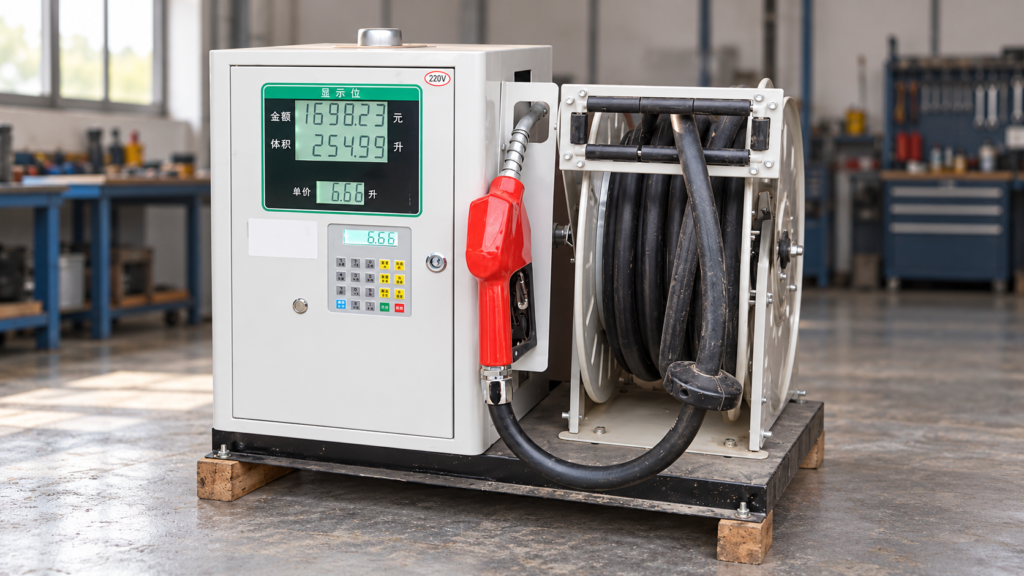
A fuel dispenser may look simple from the outside, but a short check before each shift helps protect operators, vehicles, and the transfer system. The inspection should be practical enough for a busy farm, construction site, fleet yard, or mobile refuelling point.
Check the cabinet and connections
Look for loose panels, damaged seals, exposed wiring, or signs of impact. Confirm that the power cable and grounding connection are secure. If the unit has been moved, check the pump, filter housing, meter, and hose connections before starting the motor.
Inspect the hose and nozzle
- Check the hose for cuts, flattening, swelling, or fuel residue.
- Make sure the nozzle trigger returns smoothly.
- Confirm that the nozzle holder and automatic shutoff work correctly.
- Keep the hose away from vehicle wheels and hot surfaces.
Verify the filter and meter
A blocked filter can reduce flow and make the pump work harder. Check the filter bowl and replace the element according to the fuel condition and service schedule. Compare the meter display with the previous shift record when possible. Unexpected flow changes often provide an early warning of a blocked filter, air in the line, or a worn pump.
Keep the work area controlled
Remove ignition sources, keep smoking and open flames away, and place spill equipment within reach. The transfer area should have enough lighting for operators to read the display and see the hose connection. Only trained personnel should start the pump or handle the nozzle.
Record the result
A simple checklist with the date, operator, meter reading, and any corrective action creates a useful maintenance history. Stop the unit and report the issue when a leak, electrical fault, unusual noise, or unstable flow is found.
MEBIUSE can help configure fuel dispensers with the right pump, meter, filter, hose, and power options for your operating environment. Share the fuel type, expected flow rate, and daily duty cycle when requesting a quotation.