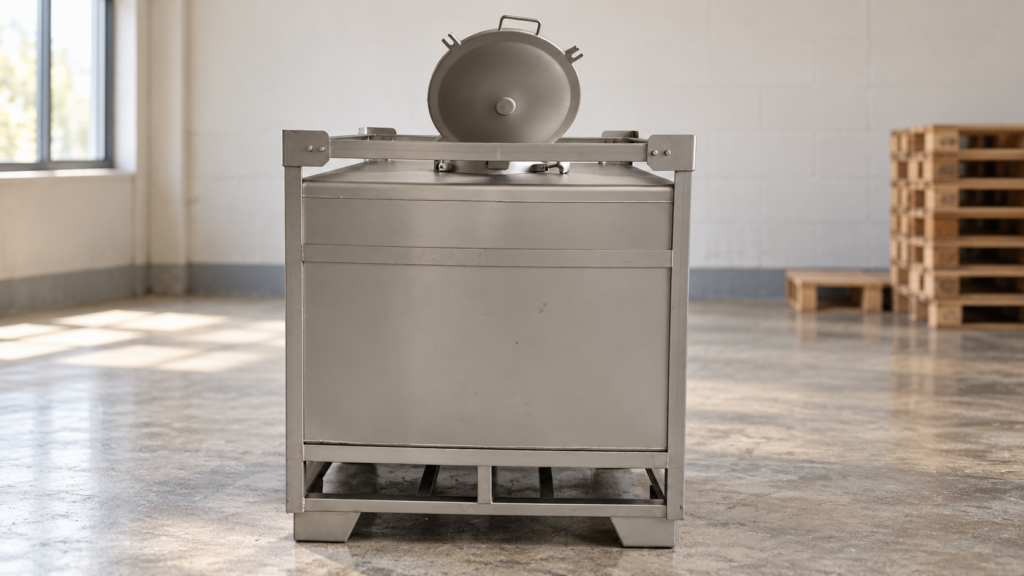
Valve and fitting choices can determine whether a metal IBC tank is easy to fill, drain, clean, and connect to the rest of a liquid handling system. The right specification depends on the stored liquid, the transfer method, and the way the tank will be moved or installed.
Match the materials to the liquid
Start with the liquid name, concentration, temperature, and storage duration. Diesel, solvents, chemicals, food liquids, and water can require different sealing materials and internal finishes. Ask the supplier to confirm compatibility for the tank body, valve, gasket, hose, and any quick connector.
Select the outlet position
A low side outlet supports efficient draining, while a higher outlet can protect the valve from contact during handling. The outlet must remain accessible after the tank is placed in a frame or against a wall. Leave enough space to operate the handle and remove the connector without bending the hose.
Choose a practical valve type
- Ball valves provide a simple quarter turn for on and off control.
- Butterfly valves can suit larger connections where space is limited.
- Gate valves may be selected when a different flow control arrangement is required.
- Drain and sampling points can help with cleaning and quality checks.
Confirm the connection standard
Threads, flanges, camlock couplings, and hose tails are not interchangeable. Confirm the nominal size, thread standard, sealing method, and connection direction on the drawing. A clear connection schedule reduces the risk of receiving a tank that cannot connect to the existing pump or pipework.
Consider maintenance and transport
Protect valves with guards when the tank will be loaded, unloaded, or moved between sites. Check that replacement seals and filters can be sourced. For outdoor storage, the cap, vent, and fittings should be protected from rain, dust, and accidental impact.
Send the supplier a complete request
Include the liquid, capacity, outlet size, connection standard, valve type, hose length, operating temperature, and delivery environment. A simple sketch or photo of the existing connection is often useful. MEBIUSE can review these details and propose a metal IBC tank configuration for storage, transport, or production use.