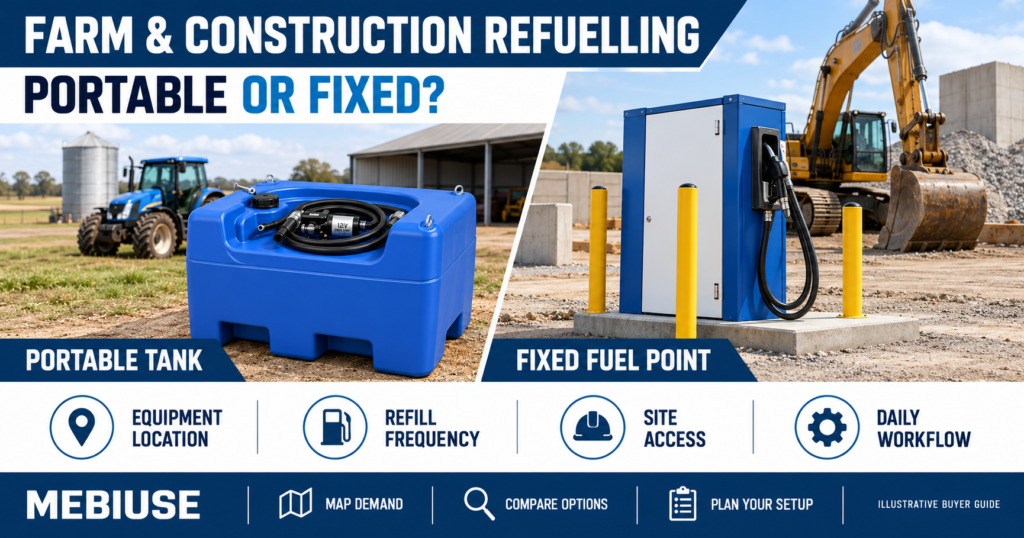
A refuelling plan should follow the work. When machines operate across scattered fields or changing construction areas, bringing fuel closer to them may be useful. When vehicles regularly return to a yard, a fixed fuel point may fit the routine better. Start by mapping demand before choosing equipment.
Map where fuel is needed
List the machines to be served, their usual locations and their expected refuelling frequency. Use your own fuel records where available. Separate a typical day from seasonal or project peaks, and note when several machines may need fuel at the same time.
Then map the practical journey: who collects the fuel, where the equipment is parked and how far operators travel to refuel. This can reveal whether the main problem is tank capacity, access or the timing of replenishment.
When a portable tank is worth considering
A portable arrangement may suit operations where the refuelling point changes with the work. Examples include equipment working away from the main farm yard or machines assigned to different areas of a construction project.
Before choosing a tank, confirm the intended liquid, working capacity, pump power, hose reach and handling requirements with the supplier. Check the dimensions and loaded weight against the proposed carrying and handling arrangement. Portability alone does not establish that a tank is suitable for a particular road-transport application.
When a fixed fuel point may fit better
A fixed location may be practical when machines or vehicles return to the same depot regularly. It can provide a consistent place for refuelling and record keeping, provided the location, access and dispensing arrangement suit the operation.
Describe the expected demand, available power and user requirements when discussing a dispenser. Ask the supplier to confirm the complete configuration rather than assuming that a pump, meter, hose or control function is included.
Compare the two arrangements
- Equipment location: changing work areas favour a review of mobile supply; regular returns to a yard support evaluating a fixed point.
- Replenishment: consider how each arrangement will be refilled and how often that can happen in practice.
- Access: review turning space, ground conditions and the actual route to the refuelling position.
- Responsibility: identify who checks the equipment, records fuel movements and arranges maintenance.
- Whole-project cost: compare installation, handling, replenishment and support needs alongside the purchase price.
Build a brief before asking for a quote
Summarise the machines served, typical and peak demand, operating locations, replenishment plan and available power. Include photos or a simple layout drawing of the proposed area. State any site rules and documentation requirements that the supplier must consider.
For example, a farm with equipment spread across separate fields and a contractor whose machines return to a depot can have similar fuel demand but different refuelling workflows. The same tank or dispensing configuration will not necessarily suit both.
Frequently asked questions
Can one site use both arrangements?
Yes, a project may evaluate a fixed supply point alongside portable equipment for remote work. Each part still needs its own suitability, handling and operating review.
Should I buy extra capacity for the busiest day?
Compare peak demand with realistic replenishment opportunities and handling limits. Ask the supplier to review the proposed working volume rather than choosing capacity in isolation.
Explore portable fuel tanks and fuel dispenser systems, then send your site requirements to discuss a suitable configuration. Follow the selected equipment’s instructions and the requirements applicable to your site and intended use.


